THE SENSITIVE MANAGER TOOLKIT
Lead your team without carrying every conversation home in your head.
You’ve finished work, but you’re still replaying a comment from the morning meeting, worrying about someone in your team or rehearsing a conversation you know you need to have.
When you notice small shifts in tone and care deeply about getting things right, management can take more out of you than anyone sees.
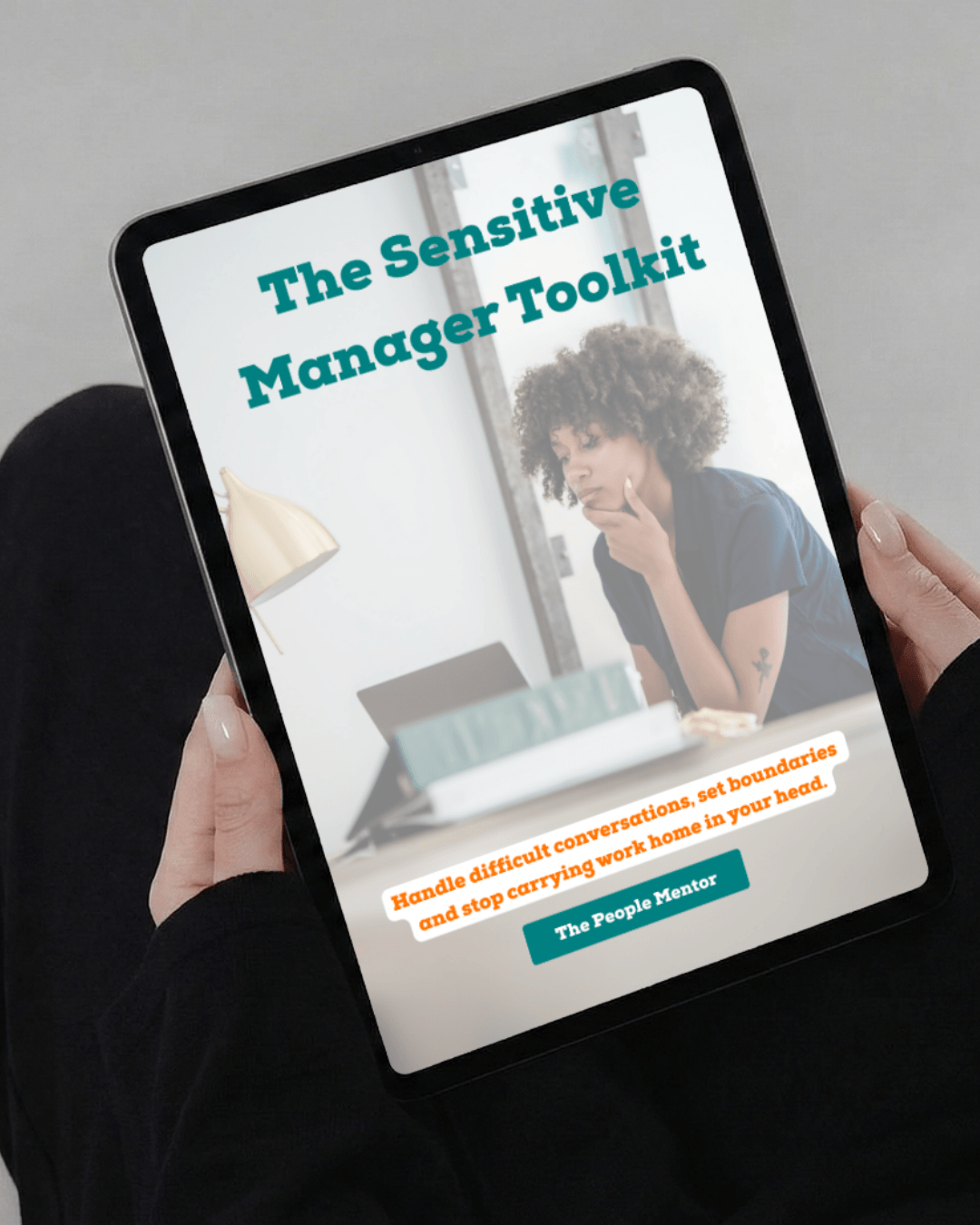
The Sensitive Manager Toolkit helps you make sense of those reactions, check your assumptions and decide what needs your attention. Build practical habits for clearer conversations, firmer boundaries and switching off at the end of the day.
For managers and team leaders who recognise themselves as highly sensitive, or find that workplace conversations stay with them long after they’ve ended.
An ebook, companion workbook and 30 day journal, with a video guide to help you use the workbook.
When caring about your team means carrying too much.
You notice a change in someone’s tone and wonder whether you’ve upset them. You need to give honest feedback, but spend so long worrying about their reaction that the conversation gets postponed.
Or you agree to one more request because saying no feels uncomfortable, then spend the evening frustrated that you’ve done it again.
Each moment takes something out of you. Together, they can leave you drained, questioning your judgement and taking responsibility for things that belong to other people.
You can care about someone and still give clear feedback. You can notice tension without assuming you caused it. And you can set a boundary while accepting that the other person may be disappointed.
The toolkit helps you separate what you’ve noticed, what you’re assuming and what is yours to act on, so you can choose your next step with more clarity.
Practical tools for the moments that take the most out of you.
The Sensitive Manager Toolkit brings together reading, exercises and daily reflection to help you put what you learn into practice.
The ebook: understand your patterns and choose a different response
Explore how sensitivity affects your decisions, energy and conversations. Work through the six parts of the ANCHOR method, with practical guidance for giving feedback, receiving criticism and supporting sensitive people in your team.
The companion workbook: work through your own situations
Use the exercises to separate facts from assumptions, prepare for difficult feedback, write your boundary phrases and plan changes to your working day. You’ll also build a closing routine to help you put work down when the day ends.
The 30 day journal: notice what keeps happening
Give yourself space to reflect on your reactions, recognise recurring patterns and record what helps. Use it alongside the guide and workbook as you practise making changes.
The workbook video guide: know where to begin
I’ll walk you through how to use the workbook and which exercises to start with, so you have a clear first step.
Start with a situation you’re facing now, then return to the tools whenever you need them.

You can be sensitive and still say what needs to be said.
I’m Nicola Richardson, founder of The People Mentor. I’ve spent over forty years managing people and helping managers with the conversations they would rather avoid.
I’m highly sensitive myself. I know how much energy can go into noticing someone’s reaction, questioning what it means and wondering whether you handled a conversation well.
I’ve also led teams, delivered unwelcome news and addressed issues that couldn’t be left unresolved. Caring about people has been part of that work, alongside being clear about what needed to change.
I created this toolkit to help you practise that balance: understand your reactions, question the thoughts that keep you stuck and prepare to act with clarity.
You can take someone’s feelings seriously and still hold a clear expectation. That includes your own feelings.
Start with the situation that’s taking up too much space in your head.
Perhaps it’s feedback you’ve been putting off, a boundary you keep giving way on or a conversation you’re still replaying.
Use The Sensitive Manager Toolkit to work through what happened, question what you’re assuming and prepare your next step.
You don’t need to complete every exercise before making a change. Begin with the guidance that fits your situation, then use the workbook and journal to practise and reflect.
Give yourself practical support for the care you put into managing others.
The Sensitive Manager Toolkit
Ebook · Companion workbook · 30 day journal · Workbook video guide
A few questions before you start
Do I need to identify as highly sensitive to use this?
No. If you replay workplace conversations, worry about people’s reactions or find it difficult to switch off, the tools may be useful to you. You can work on those patterns without deciding whether a particular label fits you.
Can it help me support sensitive people in my team?
Yes. The ebook and workbook include guidance on supporting sensitive team members while keeping expectations clear. Use it to consider your approach and discuss what helps each person, rather than assuming everyone needs the same support.
How do I receive and use the resources?
This is a digital toolkit, with no physical items sent by post. Follow the access instructions provided after purchase. Read the ebook alongside the workbook, and use the journal to record your reflections as you put the tools into practice.
How much time should I set aside?
Start with around ten minutes for one exercise or reflection. Some situations will need more thought, but you don’t need to complete the whole toolkit in one sitting. The 30 day journal gives you a structure to return to as you practise and notice what helps.